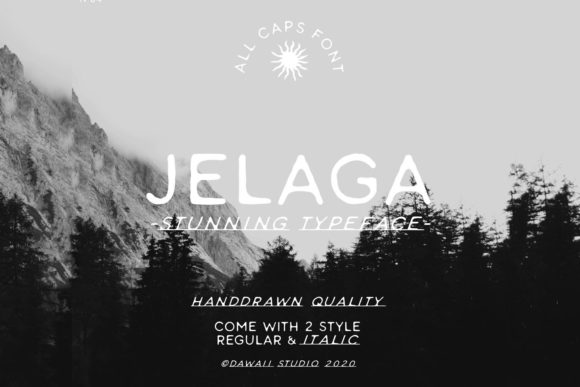
Jelaga: Elevating Design with Raw-Vintage Charm
Imagine a typeface that doesn't just convey a word, but tells a story. Jelaga, a stunning handwritten font with a raw-vintage style, offers exactly that—a direct line to authenticity and emotional depth in your visual communication. For graphic designers and creative professionals, selecting the right font is a foundational decision that shapes a project's entire personality. Jelaga provides a powerful tool to inject character, warmth, and a handcrafted feel into modern design work.
Understanding the Jelaga Aesthetic
At its core, Jelaga is a display typeface characterized by its organic, irregular strokes and a nostalgic, slightly weathered texture. This isn't a sterile, perfect font; its beauty lies in its imperfections, which mimic natural ink flow and vintage letterpress printing. In an era saturated with clean, geometric sans-serifs, Jelaga stands out by offering a human touch. This makes it exceptionally effective for projects aiming to evoke nostalgia, craftsmanship, authenticity, or a personal connection. Its visual weight and unique texture can instantly establish a mood, making it a valuable asset for creating a strong visual hierarchy.
Practical Applications Across Design Disciplines
The versatility of a font like Jelaga allows it to enhance numerous creative projects. Its style is particularly adept at capturing attention and conveying specific themes. Consider these applications:
- Branding and Logo Design: Jelaga can become the cornerstone of a brand identity for artisanal goods, boutique cafes, vintage-inspired clothing lines, or creative studios. It communicates a story of quality and care before a customer even reads the tagline.
- Marketing & Social Media Graphics: In digital marketing, stopping the scroll is paramount. Jelaga’s distinct character makes headlines in social media posts, email banners, and digital ads more engaging and memorable, boosting user engagement.
- Packaging and Editorial Design: For product packaging, especially in the food, beverage, or cosmetics industries, it adds a gourmet or handmade appeal. In editorial layouts, it can be used for pull quotes, chapter titles, or feature headers to break the monotony of body text.
- Web and UI Design: When used sparingly and strategically, Jelaga can accent key elements in web design, such as hero section headlines, call-to-action buttons, or promotional banners, adding personality without compromising overall usability.
Integrating a Handwritten Font into Your Design Workflow
Successfully incorporating a display font like Jelaga requires thoughtful application. To maintain readability and a professional presentation, pair it with a simpler, highly legible font for body text—think a clean sans-serif or a classic serif. This contrast ensures the decorative font has impact without overwhelming the reader. Always test the font at the intended size and in context with your chosen color palette and imagery. Consider your audience's expectations; while Jelaga resonates powerfully with certain demographics, it may not be suitable for every corporate or minimalist aesthetic. Its true strength lies in projects where storytelling and emotional resonance are key design goals.
Ultimately, the choice of typography is a critical component of effective visual design. Quality creative assets like Jelaga empower designers to move beyond generic solutions and craft visuals with genuine personality and intent. By selecting fonts that align with a project's narrative and audience, you strengthen brand identity, improve communication, and create a more compelling and cohesive user experience. Thoughtful design choices are what transform a good project into a great one.